Western Europe has just lived through another record summer. For anyone who owns, or is about to buy, a house on the French Riviera, in Italy or in Spain, the question is no longer how it looks in August. It is how it feels.
The good news is that the oldest houses along the Mediterranean already know the answer. They were built to stay cool without machines, and a careful renovation can bring that knowledge back.
Shade, air and mass
Passive cooling rests on three simple ideas, and each one has a place in the architecture.
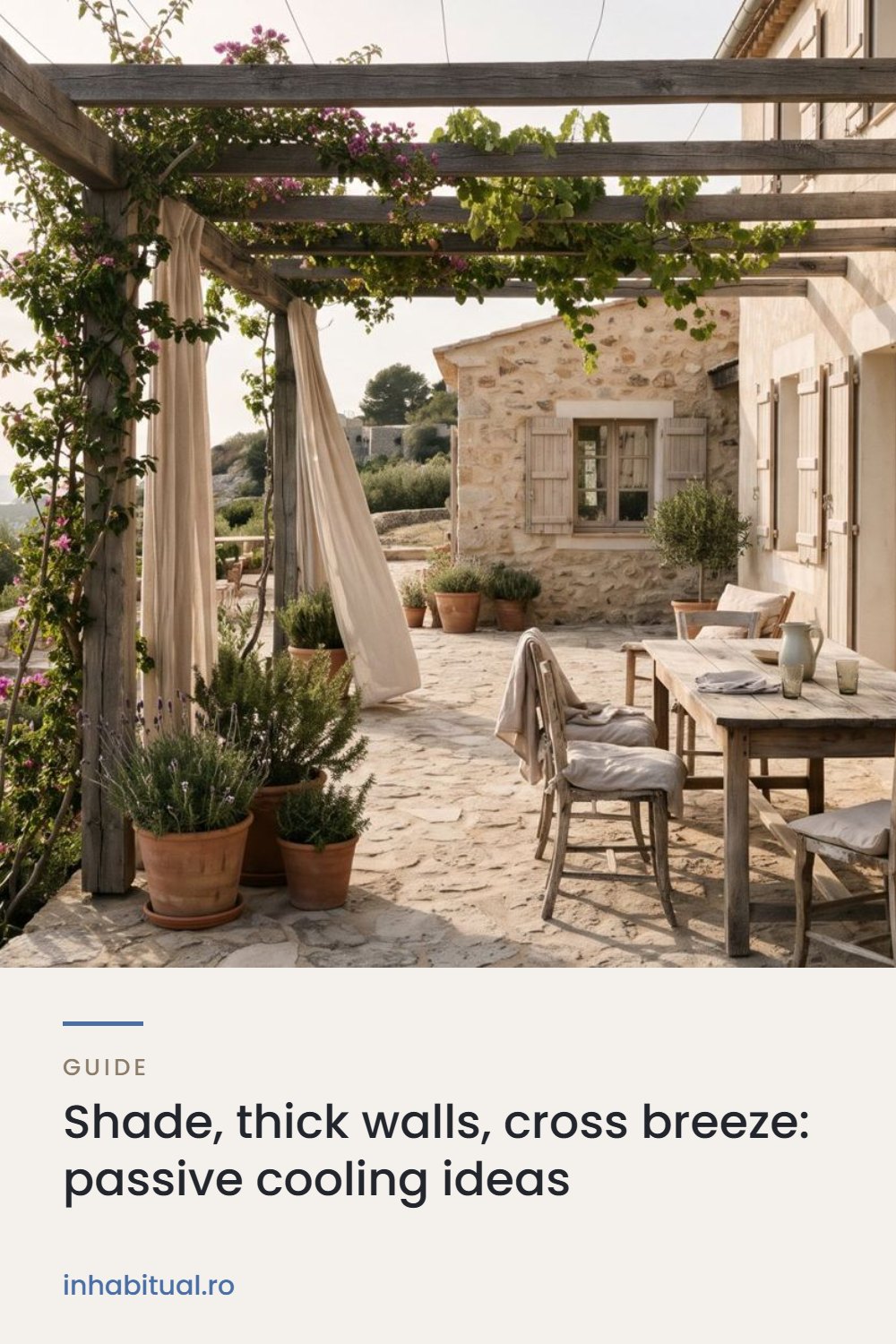
- Shade before glass. Shutters, pergolas, deep window reveals and planted terraces stop the sun before it reaches the room. Heat that never enters does not need to be removed.
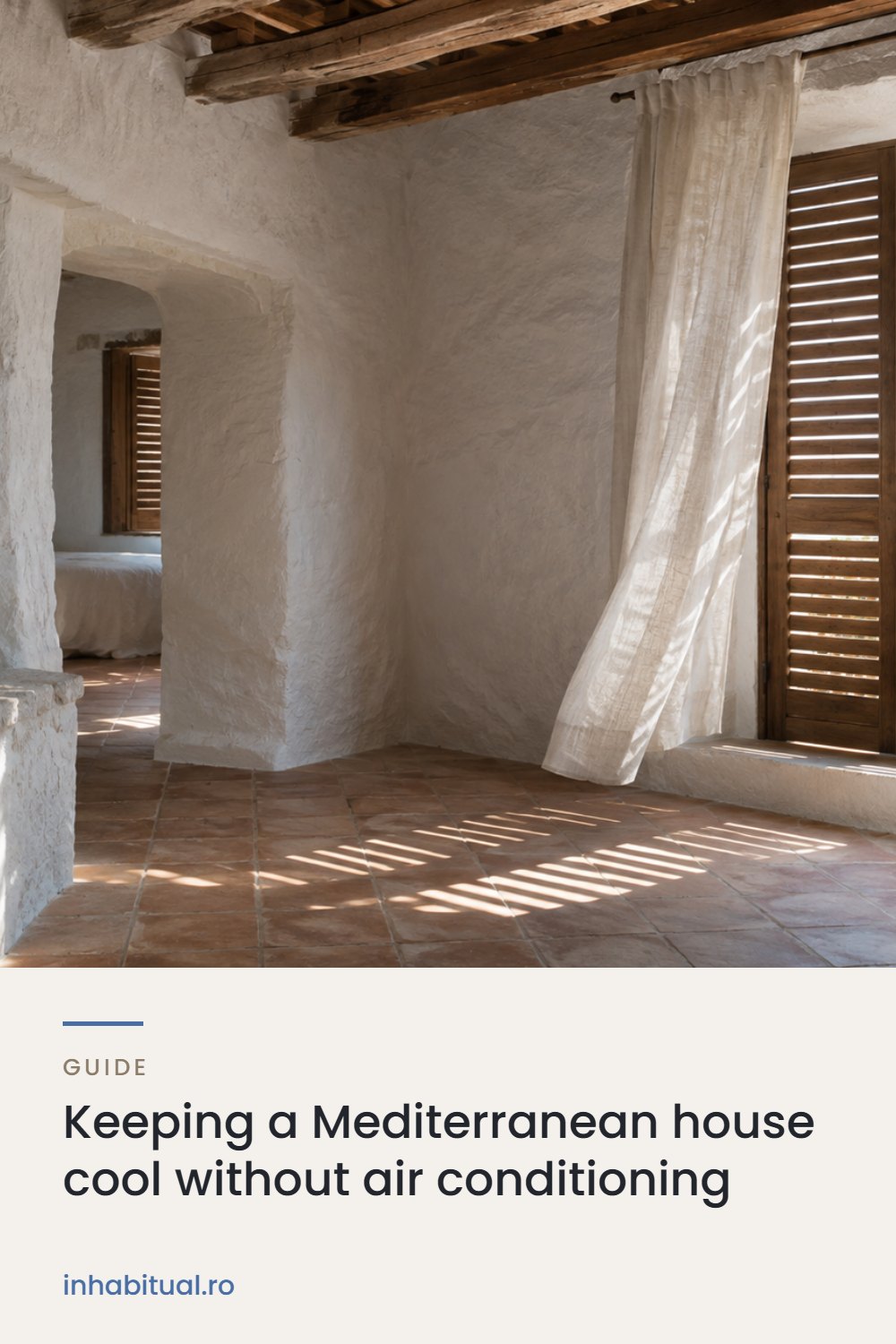
- Air that moves. Openings on opposite sides, high windows, stairwells and courtyards let warm air rise and leave. Opening the house at night and closing it by day is still the most effective routine.
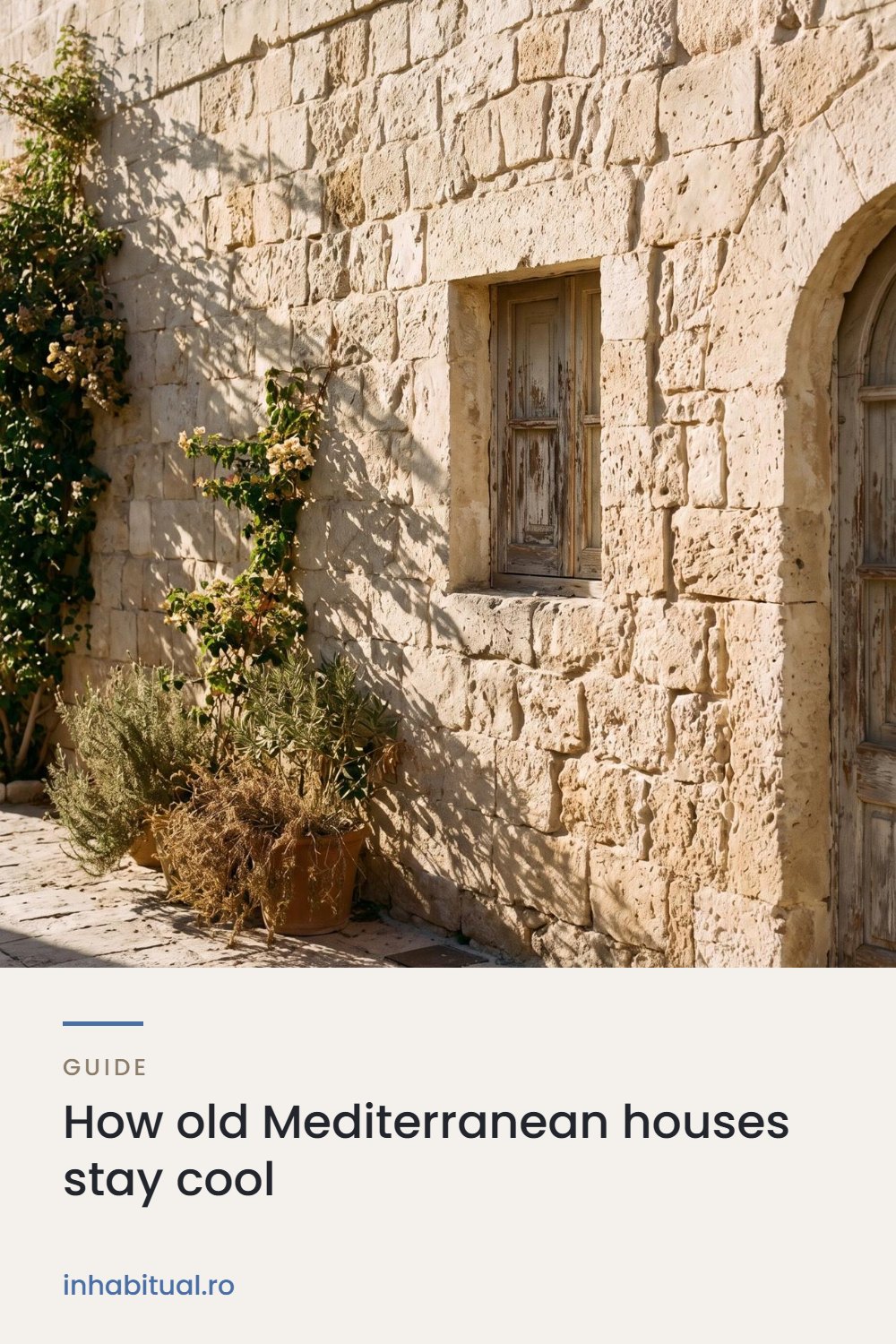
- Mass that waits. Stone, brick, lime and terracotta absorb the heat of the day slowly and release it at night. A thick wall is a calendar as much as a structure.
Renovating without losing it
Many renovations remove exactly what kept a house comfortable: shutters replaced by bare glass, walls lined with materials that cannot breathe, interior courtyards closed for an extra room. The first step of a good project is to understand how the house was meant to work, then decide what to keep, what to repair and what to add.
Modern layers still have their place. Insulation, efficient glazing and discreet mechanical ventilation can support the old principles instead of replacing them. The aim is a house that stays pleasant through the summer and asks for less energy to do it. If the house is in Italy, our guide to renovating a house in Italy from abroad covers the next steps.