The architecture of water. Dobruja’s baths, from thermae to hammam
In Dobruja, more cultures have lived side by side than anywhere else in Romania. Each brought its own way of entering the water. On what remains of these rituals, and on a bath built for all the senses.
On the Black Sea coast, bathing was never only about hygiene. Romans, Ottomans, Tatars, Greeks, Armenians, Lipovan Russians and a dozen other communities settled in Dobruja, layer upon layer, and none erased the one before. Each left a way of bathing, and with it, a way of building.
Three ways of entering the water
The Roman thermae. In Tomis, today’s Constanța, the public baths of the 3rd–4th centuries were as much a meeting place as a place to wash: vaulted halls, marble walls, mosaic floors and heat rising from the floor through the hypocaust. The bath was a social space, built with grandeur.
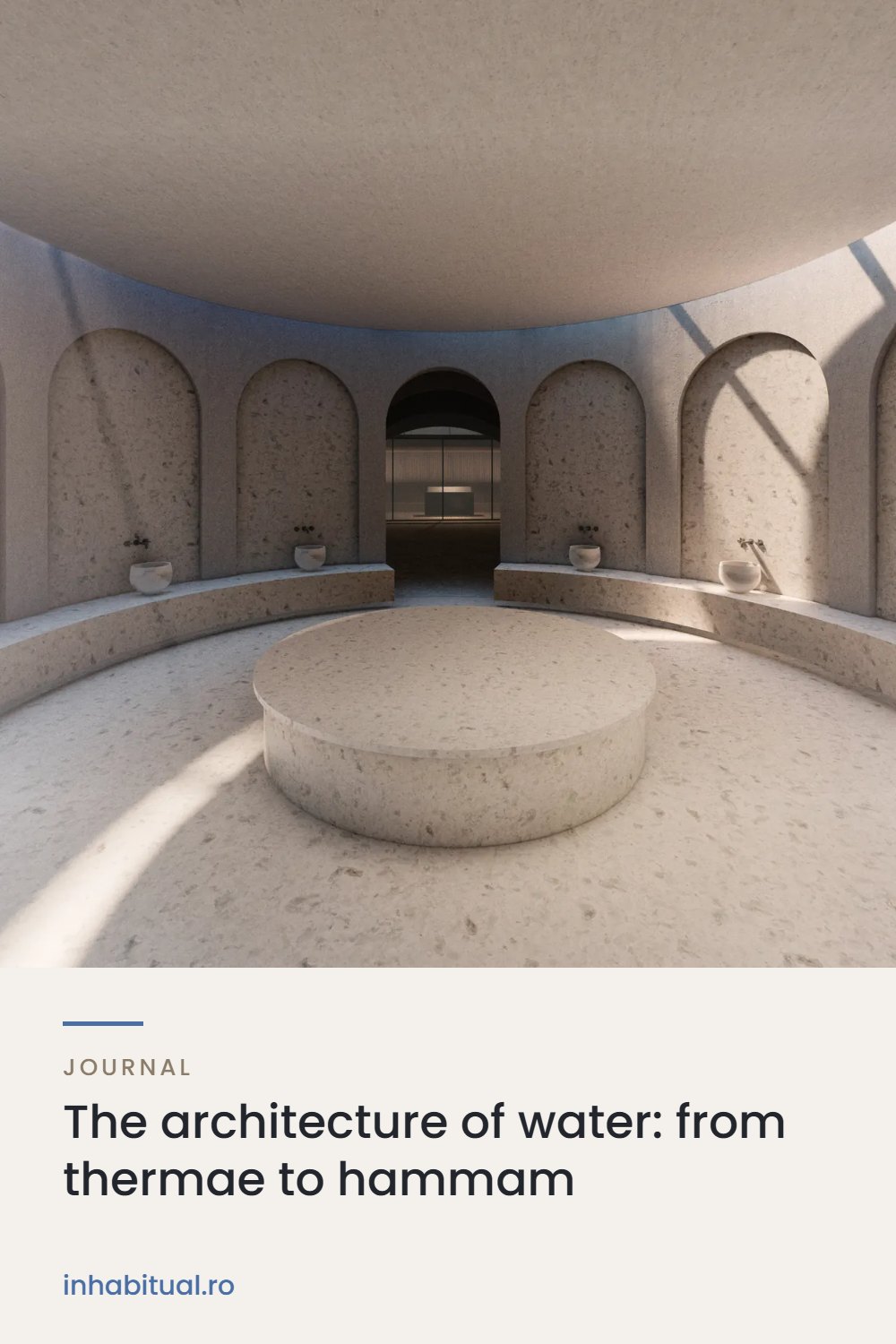
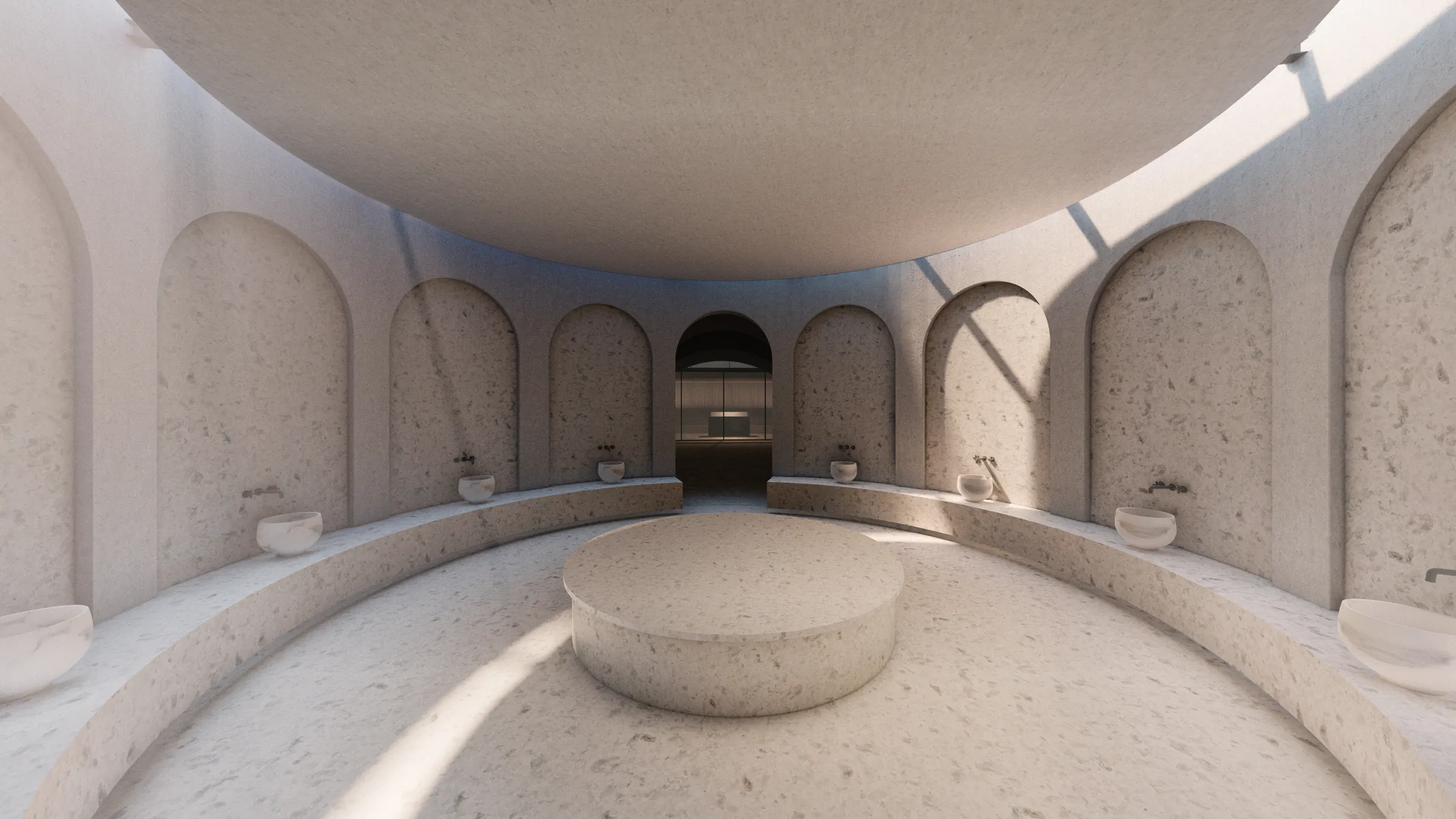
The hammam. You enter through a bent passage, so no gaze reaches inside. Then the changing room, then ever warmer rooms, up to the central chamber: beneath a dome pierced by light lies the warm stone you lie on. There is no pool in a hammam: water flows, it does not stand.
The banya. In Lipovan Russian households, the steam bath has three rooms: an entrance for clothes, the room with the hearth and the heated stones, then a place to rest. Steam alternates with cold water, again and again. At the end, you wrap yourself in thick blankets.
Three cultures, three rituals, and the same structure: a vaulted centre, the most carefully made space of the building, and a sequence of rooms that prepare you to reach it.
The 20th century: treatment for the many
After 1955 the coast filled with cold-water and mud-bath establishments in Eforie Nord, Eforie Sud and Techirghiol. They are clear, symmetrical buildings, with porticoes opening to the beach and, at times, local stone. But the programme changed: bathing was no longer an individual ritual, but a treatment for crowds. The function remained. The atmosphere was lost.
An architecture you feel
Architects such as Juhani Pallasmaa and Peter Zumthor have written about the same thing: contemporary architecture speaks almost only to the eye. In a bath, the eye is the last sense that matters. What counts is the temperature of the stone underfoot, the echo of water in a vaulted room, steam, the passage from light into shadow. At Vals, Zumthor carves the baths into the mountain. At Leça, Álvaro Siza lets the rock and the ocean finish the pools for him.
Salus per Aquae
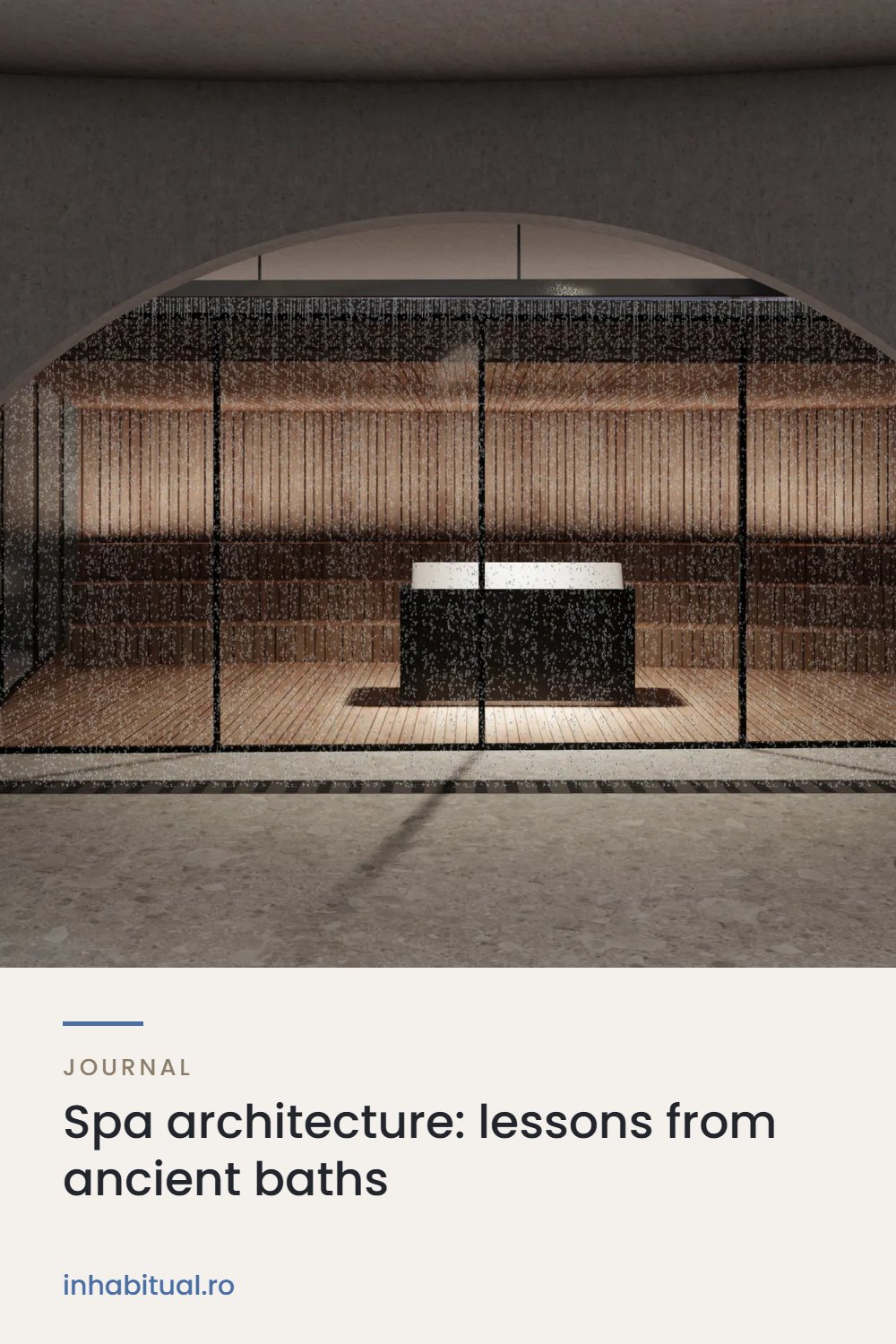
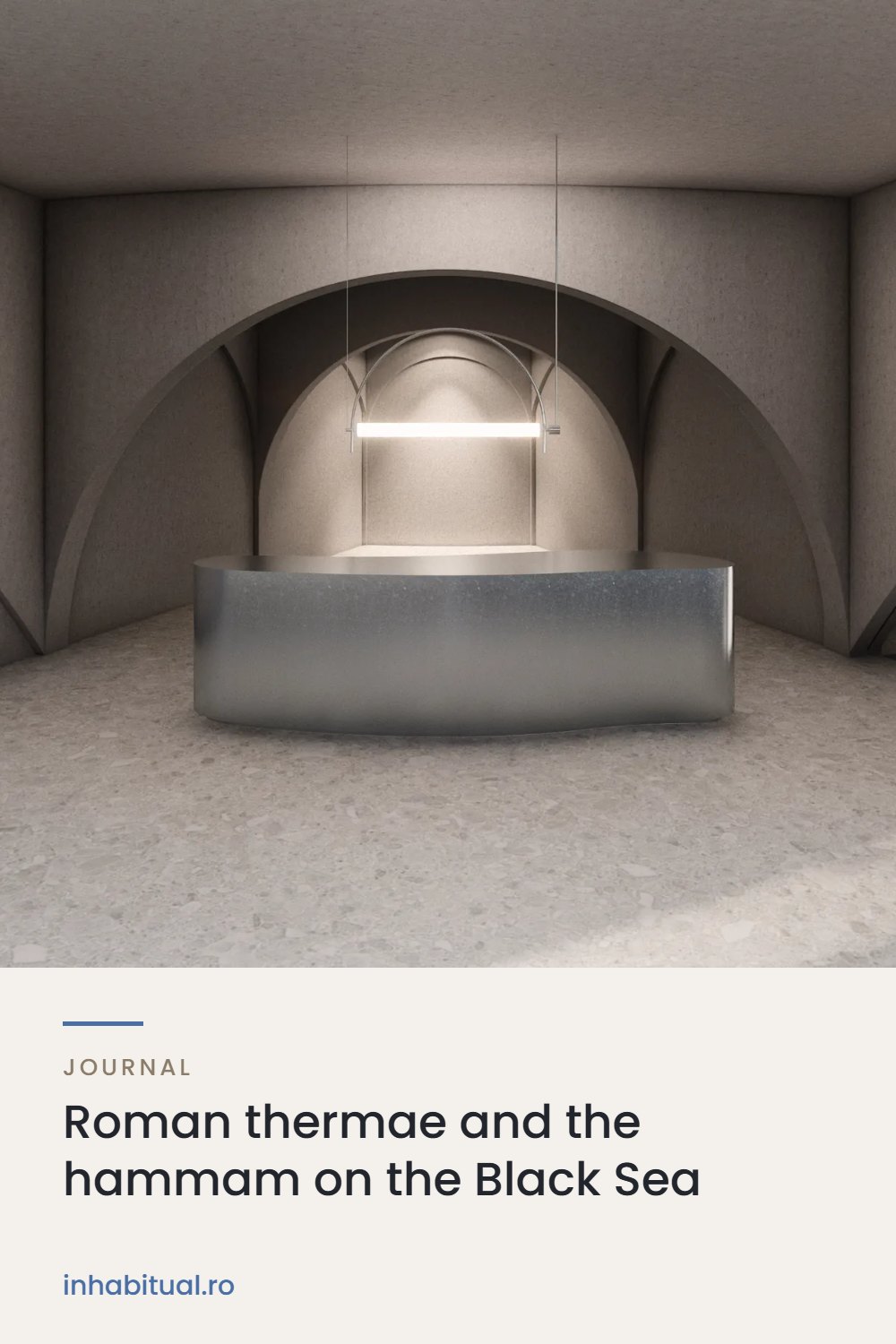
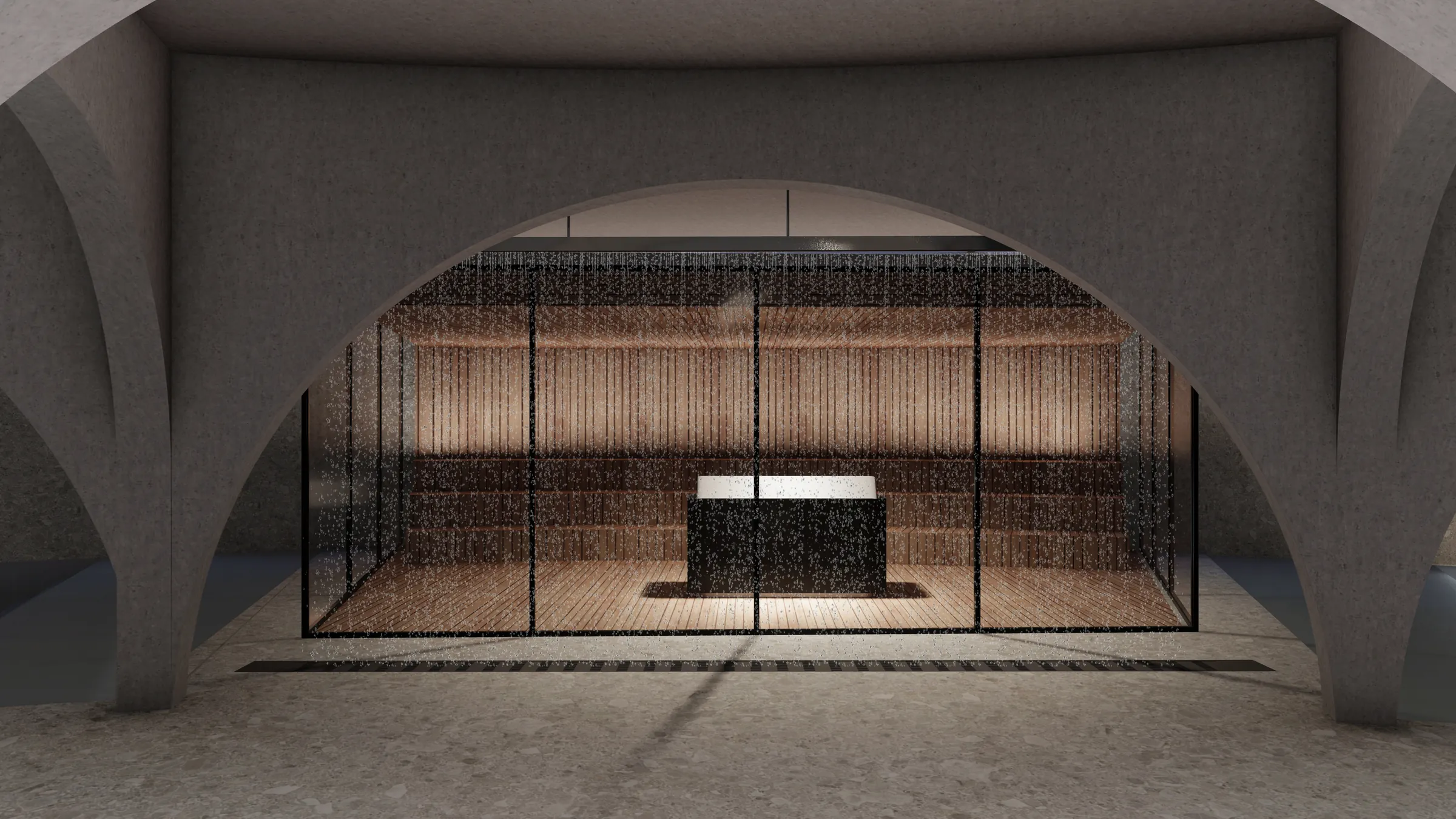
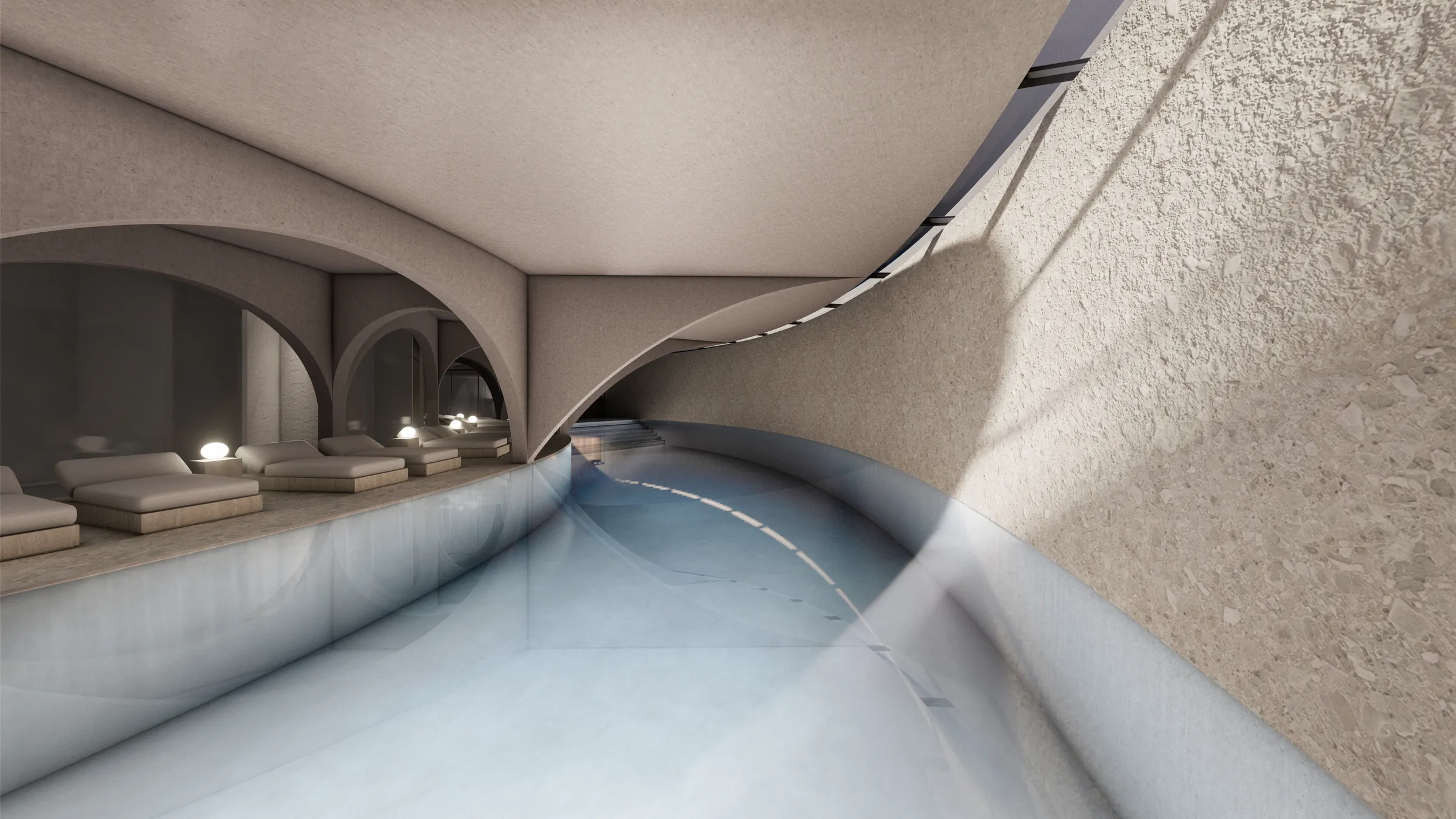
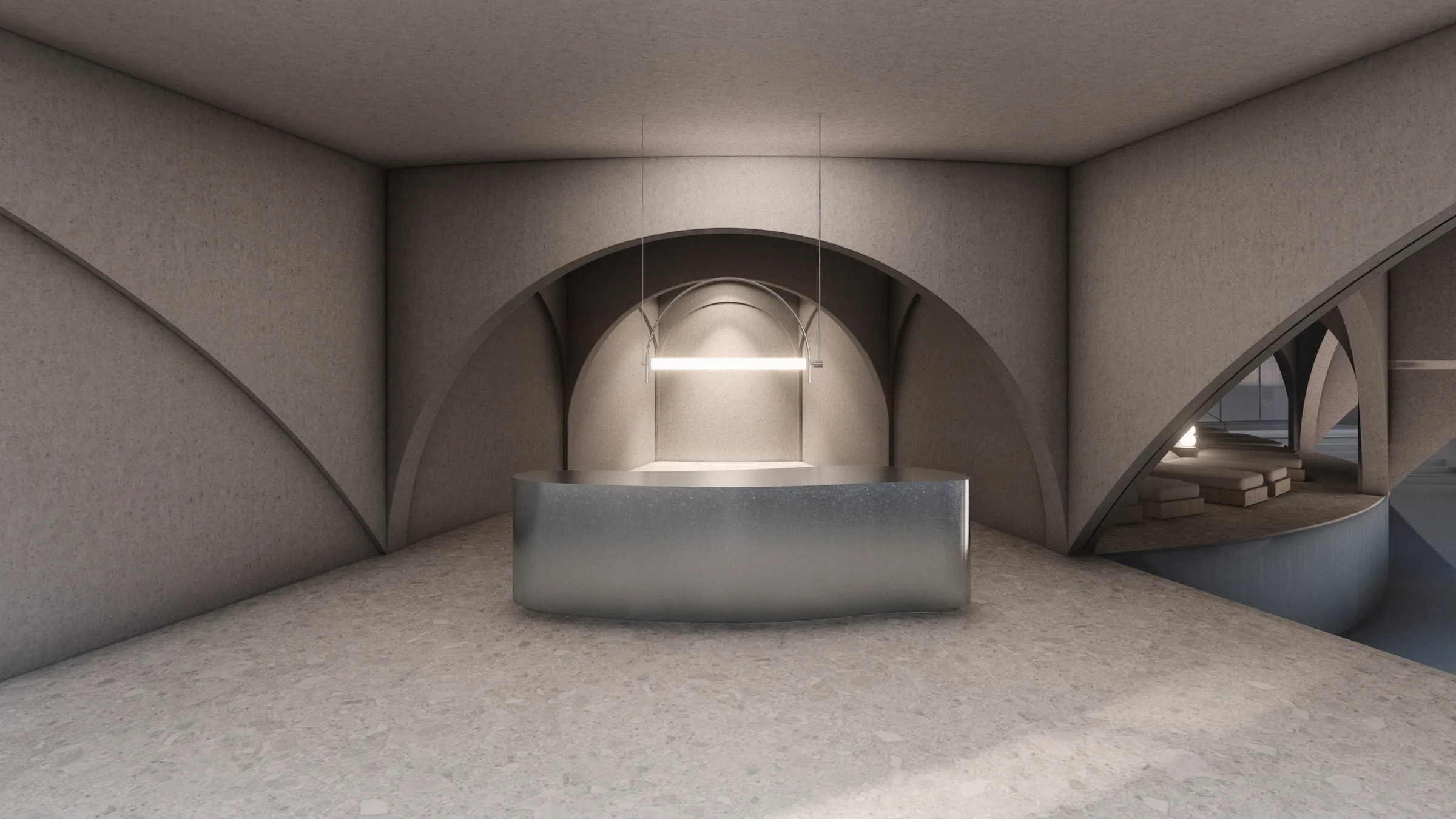
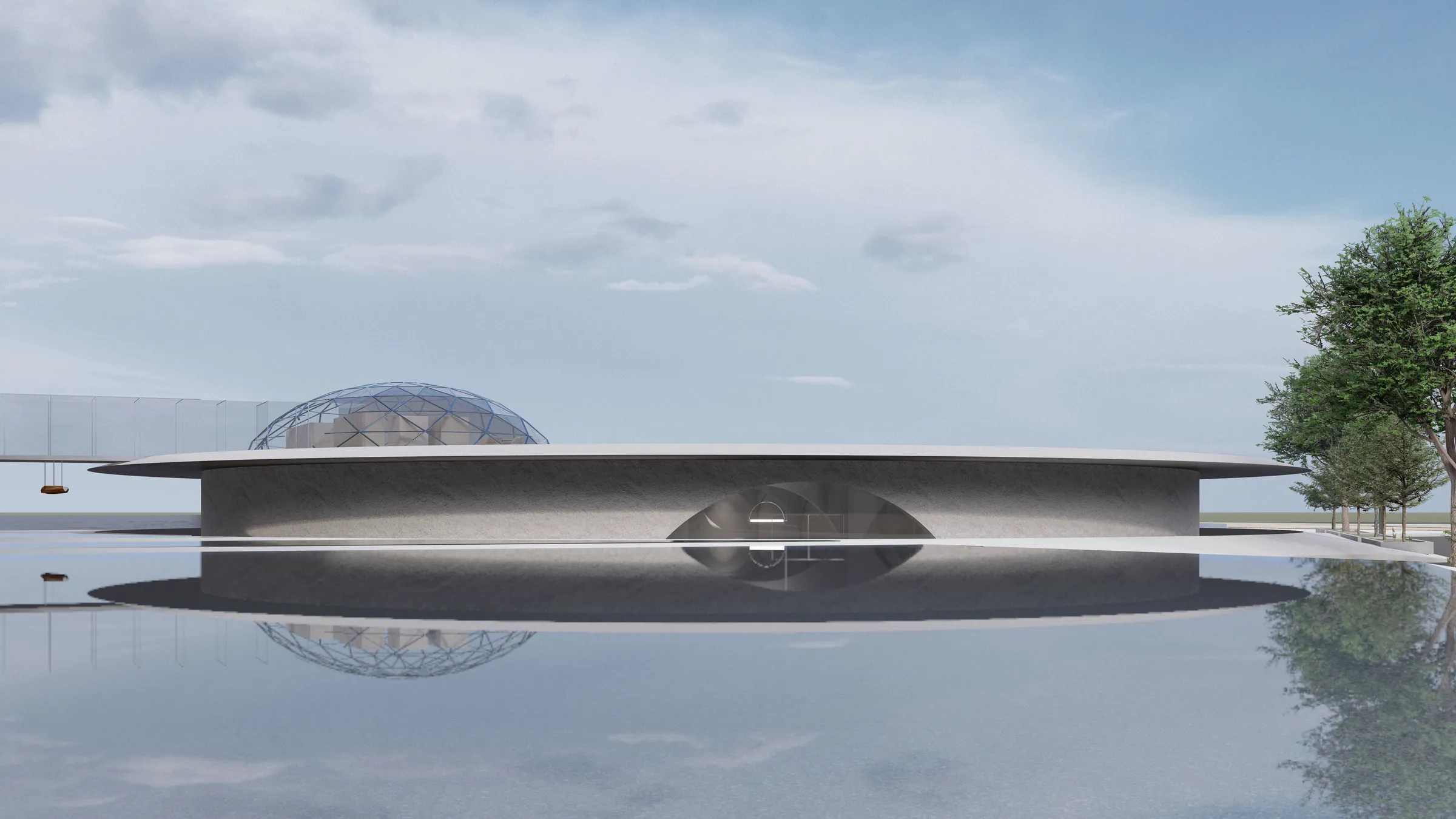
Our project for Techirghiol starts here. It copies none of the three traditions, but keeps their shared structure: a route leading from light into shadow, to a circular hammam at the heart of the building. Everything else wraps around it: saunas veiled by curtains of water, a pool lit by a slit in the ceiling, rooms where you sleep next to your own bath. The materials belong to the place: stone, limestone, travertine.
“A good bath is not looked at. It is felt with the skin.”
The full project
The route, volumes and materials of the thermal baths in Techirghiol.